Progression of Human Form - Woman V

Progression of Human Form
Curated by Shahzad Aslam
Willem de Kooning, Woman V, 1953 
Abstract Expressionism is a movement in art history concerned with high intensity, emotionality, rebelliousness, and dealing with a world in the post-World War II landscape. Woman V by Willem De Kooning encompasses and builds on all the previous movements that came before it ranging from impressionism to surrealism. This interpretation of the human form combines various elements from the movements preceding it to produce a truly modern composition. The mangled face and chaotic application of paint produce a terrifying effect, similar to the gut reactions induced by surrealist and cubist works. In Woman V, the human form is depicted not through anatomical correctness or realism, but purely through emotion intensity. You don’t see the woman necessarily, but you definitely feel her pain and anger. If this were simply another portrait piece, the disturbing and shocking qualities of the piece would be stripped away. The piece would become about some woman rather then embodying the feelings of thousands of women who suffered during World War II.

  • 12:00 AM

Progression of Human Form - Nude Descending a Staircase No. 2

Progression of Human Form
Curated by Shahzad Aslam
Marcel Duchamp, Nude Descending a Staircase No. 2, 1912
Marcel Duchamp’s Nude Descending a Staircase No. 2 combines the geometrical deconstruction and analysis of the cubists and energy and movement of the futurists forming a movement in art history known as surrealism. The work is a testament to the growth and development of the depiction of human form in paintings. Compared to an Impressionist portrayal of form, Nude Descending a Staircase No. 2 lacks all of the features, colors, and realism of a human figure yet lacks none of the emotion. Moreover, Cubist works, such as Nude Descending a Staircase No. 2,  allow for a deeper, more subconscious connection to paintings. Unlike Impressionist works in which the viewer initially knows the subject matter and can compare it to the real world, such cubist works force the viewer to approach the piece open-mindedly. The works often confuse the viewer and provoke natural instinctive reactions to the works, tapping into the subconscious.

  • 12:00 AM

Progression of Human Form - Les Demoiselles d'Avignon


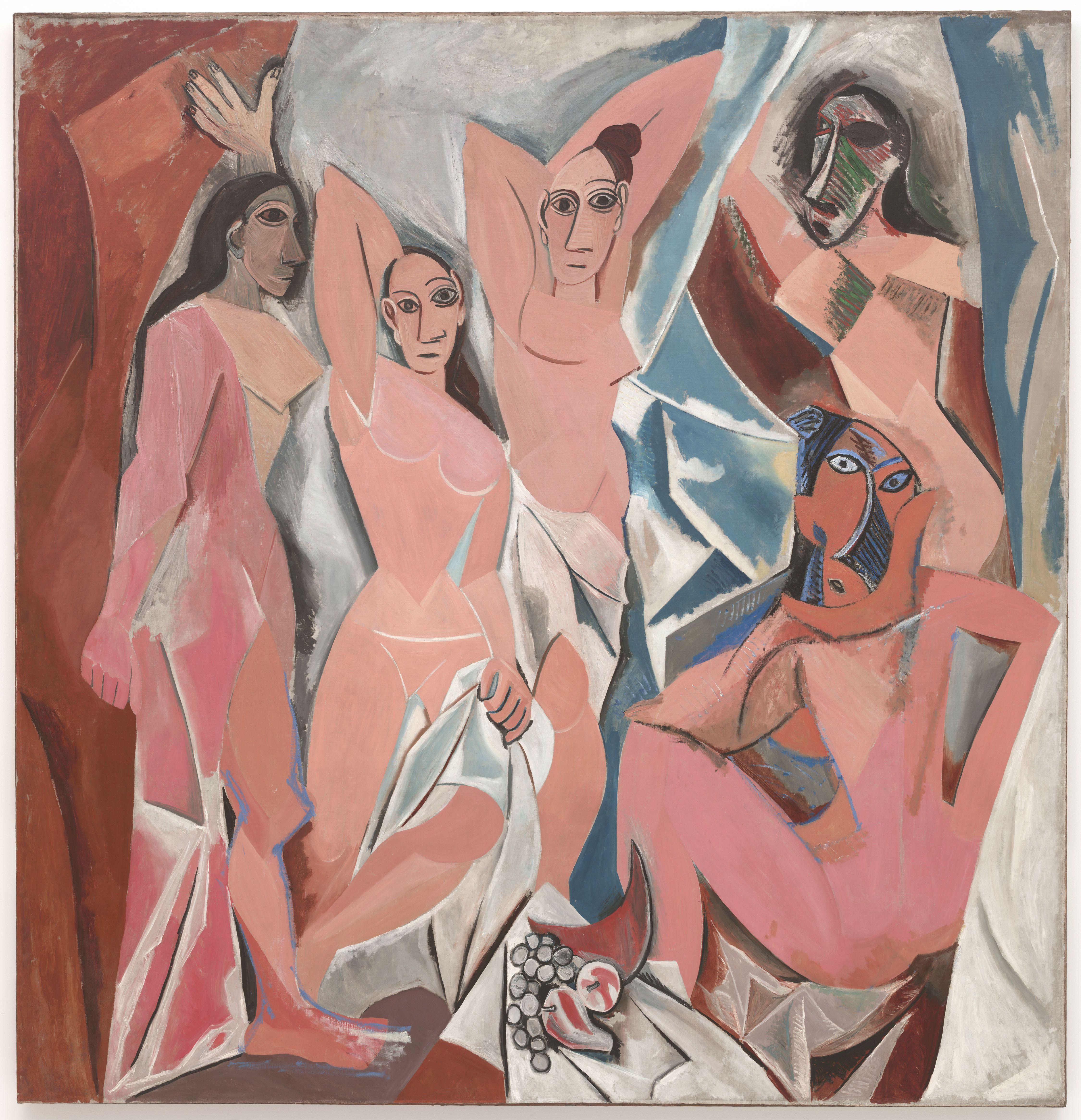
Pablo Picasso, Les Demoiselles d'Avignon, 1908

Pablo Picasso’s Les Demoiselles d'Avignon completely reinvented and advanced painting as an art form. Les Demoiselles d'Avignon” completely abandons perspective and all previously conceived notions of painting resulting in a work that appears disjointed and chaotic. Picasso moves away from traditional two-dimensional painting and ventures into the world of three dimensions. This form of painting is known as cubism, a genre that attempts to break up, reassemble, and analyze the fundamental qualities of a figure. Furthermore, cubism, as the name suggests, places an emphasis on geometrical shapes and deconstructing the world around us into simpler shapes and forms. Line, contour, color, perspective, lighting, and composition are given up, revolutionizing the way we interact with artwork and perceive the human form.

  • 12:00 AM

Progression of Human Form - Woman With a Hat

Progression of Human Form
Curated by Shahzad Aslam

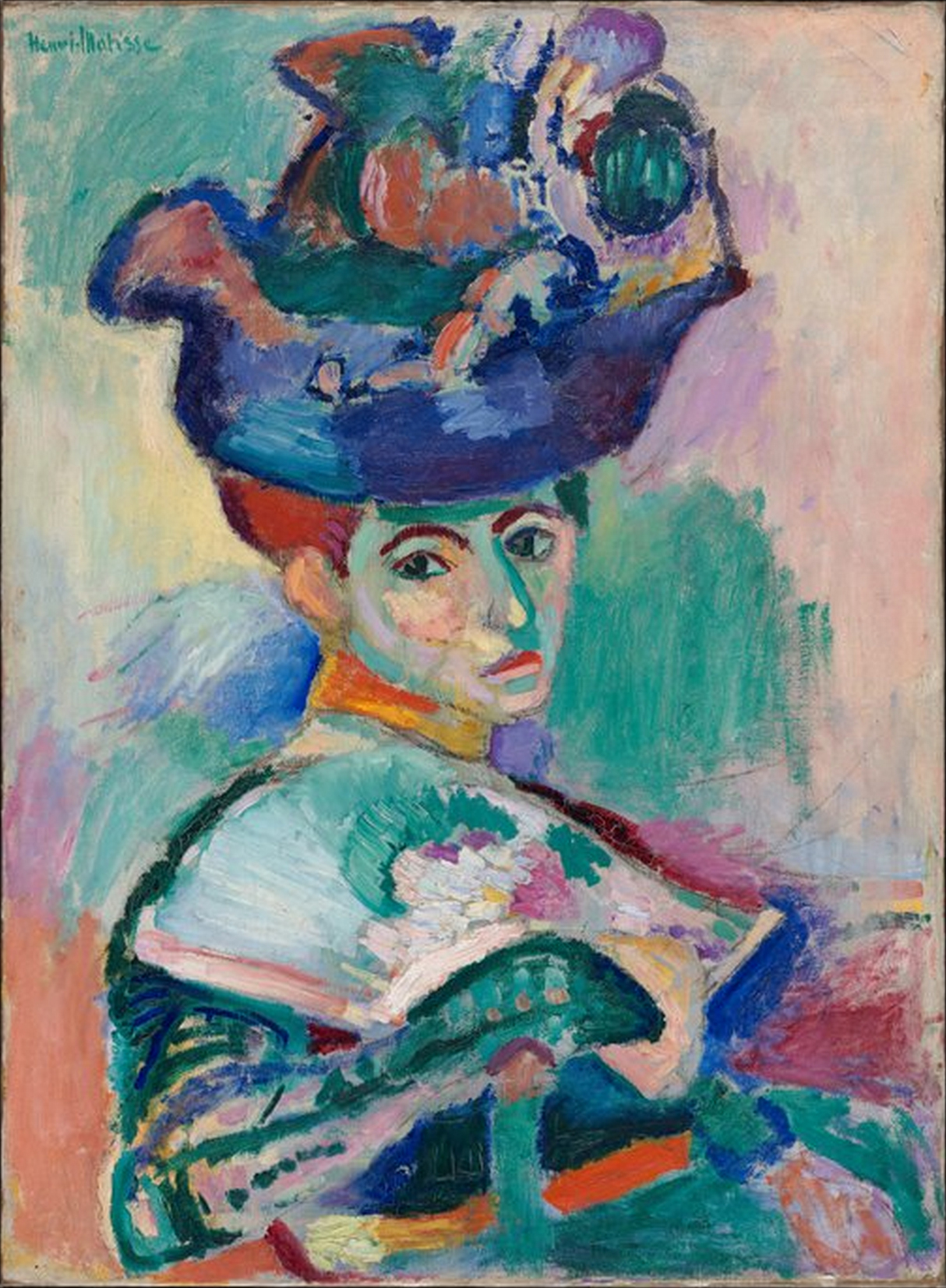
Henri Matisse, Woman with a Hat, 1905

Woman with a Hat by Henri Matisse is an example of another work aimed at rejecting many impressionist notions about painting. Unlike an impressionist piece that aims to be precise and realistic in the depiction of form and figure, fauvist works such as Matisse’s Woman with a Hat are raw, visceral works composed of distinguishing brushstrokes that were characteristically painterly. Like Gauguin, Matisse’s color choices are completely abnormal yet define the painting. The color is put on the canvas in a block like fashion resembling again the geometrical emphasis of the post-impressionists. Fauvism moves away from traditional modes of painting and breaks down many norms that pave the way for artists such as Pablo Picasso and Marcel Duchamp.

  • 12:00 AM

Progression of Human Form - The Seed of the Areoi

Progression of Human Form
Curated by Shahzad Aslam


Paul Gauguin, The Seed of the Areoi, 1892
The triviality of subject matter by impressionists concerned post-impressionist painters like Gauguin. The Seed of the Areoi depicts a native Polynesian woman and offers insight into unrepresented cultures and peoples. Moreover, post-impressionists continued utilizing rich, vibrant colors, unique brushstrokes, and depictions of humans like impressionists. However, post-impressionist did away with many old values of the masters and represents a defining moment in art history. Gauguin led the movement through implementation of distorted, elongated figures for emotional effect, abnormal and illogical color, and increasingly geometric figures and forms as seen in The Seed of the Areoi.

  • 12:00 AM

Progression of Human Form - On the Terrace

Progression of Human Form
Curated by Shahzad Aslam

Pierre-Auguste Renoir, On the Terrace, 1881
Renoir, known for glorifying female sensuality and femininity represents an impressionist style painter. For impressionists like Renoir, the beauty of the female form was accentuated through vibrant colors and less emphasis on line and contour unlike the romantics and others that came before them. The vibrancy in On the Terrace is achieved through the separate application of each color of paint and non-mixing or blending of the paints on the canvas. Furthermore, the work is characteristic of the Impressionist period, as it set outdoors with an ordinary mother and daughter as the subject. Additionally, the background and foreground containing the figures are blended seamlessly together creating a snapshot, photographic effect. The forms of the females at this time are still traditional and painted accurately. The differentiating factor in Impressionism comes from the application of the paint through thin, open brush strokes and subject matter rather than a reinvention of the human form.

  • 12:00 AM

Progression of Human Form - Diana Leaving the Bath

Progression of Human Form
Curated by Shahzad Aslam

François Boucher, Diana Leaving the Bath, 1742    

“Progression of Human Form” is an exhibit designed to study the evolution of the human form and the relevant artistic movements that impacted artist’s interpretations of figure. The seven pieces in the exhibit depict women. Some women are depicted with clothing while others are nude. The exhibit addresses works beginning in the 18th-century Rococo period up to abstract expressionism in the mid twentieth century.

The female nudes depicted in Boucher’s Diana Leaving the Bath are exemplary of the Rococo style and are somewhat reminiscent of the Baroque era. Rococo artists such as Boucher retained some qualities from the baroque while breaking away from others. The rich use of creamy colors, and irregular balance, were kept from the baroque period while the grandeur, overly ornate, and heavily politically focused aspects were forgotten. Moreover, as depicted in Diana Leaving the Bath, the subject matter of rococo works often were more playful and had an air of sexuality and connection to the natural world unlike the preceding works in other artistic movements. Boucher’s depiction of the nudes appears visually and anatomically realistic. The style is reflective of the renaissance masters. Boucher paints the goddess Diana and a nymph in perfect human form with approximately normal features.

  • 12:00 AM

Un Chien Andalou


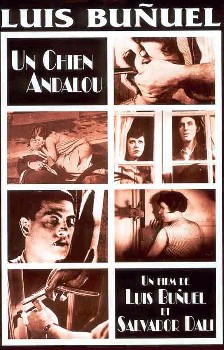
              Un Chien Andalou (1929), Luis Bunuel & Salvador Dali
Watching Un Chien Andalou (An Andalusian Dog), a silent surrealist short film by Luis Buñuel and Salvador Dalí will unquestionably leave you feeling disgusted, bewildered, and with a newfound understanding of surrealism. The film begins eerily with a man sharpening a straight razor on his balcony. The camera quickly cuts to a scene of the night sky with a bright full moon and ominous, singular, thin cloud. When the camera shifts back to the man, he is seen stretching a woman’s eyelids similar to when using eye drops. Another quick cut back to the night sky and the razor-thin cloud moves closer toward the moon. Suddenly the imagery clicks.

You brace yourself and pray you are wrong. It’s too late; the man slowly drags the razor blade across her iris, spilling the inner stuffing from inside the eyeball. Your stomach drops and you realize that only thirty seconds have passed. What an inconceivable way to begin a film, leaving the viewer horrified and repulsively intrigued! The scene ends abruptly and the text reads, “Eight years later.” The film promptly dives into another unrelated bizarre scene. This trend continues and the scenes following each other grow increasingly nonsensical over the course of fifteen minutes.

You try to make sense of the random scenes and search for some semblance of a plot, but alas, nothing. There is neither enough time nor context to comprehend the assumed symbolism embedded in each scene of the production. The film emerges as a compilation of several arbitrary scenes that cannot be understood through comparison or reason. Dalí and Buñuel, in fact, agreed that “no idea or image that might lend itself to a rational explanation of any kind would be accepted” when writing the script. Similar ideology influenced the Beatles in the creation of “I am the Walrus.” These artists reject notions of inherent symbolism that often diminish the significance of art and instead favor impulse reactions to their work. Un Chien Andalou suggests that surrealist works are perhaps not to be understood, only felt.
  • 12:00 AM

The Daughters of Edward Darley Boit

John Signer Sargent, The Daughters of Edaward Darley Boit, 1883
When examining The Daughters of Edward Darley Boit by John Singer Sargent, I am initially struck by the openness of the composition and peculiar placement of Boit’s four young daughters.

Sargent’s arrangement of the girls along with the large vases and rug fragments balances the work. The central segment occupies the focus of the painting in two ways. First, the rug creates hard horizontal and vertical lines contrasted by the distinct coloring of the rug and the floor. The rug comprises the majority of the lower right hand of the painting effectively cutting it off from the other parts of the piece. In this section, the youngest child stops playing with her doll and gives her full attention to someone, perhaps her father, facing her.

The second youngest daughter stands completely to the left and is cut off by the hard vertical line between her and the large vase separating the two rooms. Like her sister, she also stares blankly at the viewer. Hidden in the shadows of the back room stand the two eldest daughters. The second eldest daughter reflects her younger siblings body language while the eldest daughter fails to acknowledge anyone who may have just walked into the room and leans against the vase, unconcerned. The roles of the vases are important as they, along with color and placement of figures help to balance the painting. The red room divider balances the red dress of the second youngest girl standing to the left. Furthermore, the stoic expression and lifeless quality of the girls posing reminds me more of a still life than a family portrait. The girls almost blend into the surroundings and become a part of the room rather than individuals living in it. The maid-like clothing of the girls suggests perhaps their future domestic roles and furthers the notion of lifelessness. Sargent’s The Daughters of Edward Boit is more than just a family portrait. Through Sargent’s clever use of space, color, and positioning, he creates a surreal atmosphere leaving the viewer intrigued and oddly mystified.

  • 12:00 AM

The Stonebreakers and The Communist Manifesto

Gustave Courbet, The Stonebreakers, 1849
The Stonebreakers by Courbet undeniably depicts the concern for the plight of the poor and the working class. The two figures toil to remove stone from a road in construction. This work requires little skill and almost no intellectual capacity and is usually reserved for punishing chain gangs in modern times. Rather than glorifying their work, Courbet dresses his figures in tattered garbs to further illustrate the nature of their work and the intense amount of physical exertion needed. Additionally, this work embodies the realist movement as Courbet paints an accurate account of the ill-treatment and of the workers that was an all too common facet of mid-century rural life in France. Courbet makes a point to retain the workers identity in order for the work to transcend the individual and serve as a universal representation of suffering.

The two stonebreakers and the surrounding scene are painted with rough brushwork, reflecting the work itself. The figures are positioned against a low hill typical of rural France. The hill rises and takes up the entire upper half of the composition, leaving only a small window to the sky in the upper right hand corner. This effectively isolates the laborers and suggests that they are physically and socio-economically trapped by their work. One year prior to Courbet’s The Stonebreakers, Karl Marx and Frederic Engels published The Communist Manifesto. They write about the plight of the worker in Chapter 1 of the manifesto titled Bourgeois and Proletarians, “In proportion as the bourgeoisie, i.e., capital, is developed, in the same proportion is the proletariat, the modern working class, developed — a class of laborers, who live only so long as they find work, and who find work only so long as their labor increases capital. These laborers, who must sell themselves piecemeal, are a commodity, like every other article of commerce, and are consequently exposed to all the vicissitudes of competition, to all the fluctuations of the market.” Courbet, whether intentionally or not, embodies the ideas of Marx and Engels through his realist depiction of the plight of the laboring class in France in his work The Stonebreakers.
  • 12:00 AM

Vampire (Love and Pain)

Edvard Much, Vampire (Love and Pain), 19894
Originally titled Love and Pain, Vampire represented a scandalous work by Edvard Munch in 1894. Between 1893-94, Munch painted three versions of Vampire, highlighting different portions in each. Furthermore, during the 1890s, Munch grouped several works under a common theme of love. These paintings include The Voice, Separation, Jealousy, The Kiss, Love and Pain, and Madonna. These works were displayed initially at an exhibition in Berlin. They were part of a larger undertaking by Munch know as,"The Frieze of Life," which explored themes such as love, fear, death, melancholy, and anxiety.

Vampire
could portray a couple’s loving embrace or a vampire’s tortured grip. Some interpret “vampire” as a reference to prostitution. Either way, Nazi Germany deemed this piece “morally degenerate.” Nonetheless, a thought provoking work, it is hard to deny to the complex feelings expressed in this painting despite Munch dismissing the picture as "just a woman kissing a man on the neck." For the past 70 years, this controversial work featuring a woman with fiery red hair squeezing and pressing her lips against an unidentifiable man has remained in the hands of a private collector. However, in a 2008 Sotheby's auction in New York, the piece sold for $38,162,500, shattering the previous record of 31 million dollars set for The Scream by Munch.
  • 12:00 AM

Luncheon on the Grass

Edouard Manet, Luncheon on the Grass, 1863
Édouard Manet’s Luncheon on the Grass stands out to me as one of the finest examples of impressionist era pieces because of Manet’s freshness, attention to his audience, juxtaposition of figures and setting, and willingness to paint the taboo. French citizens first got a taste of Manet’s thought-provoking, scandalous work in 1863. Two finely dressed gentlemen sit back comfortably, immersed in discussion, seemingly unmindful of the two naked women that encircle them.

The brilliance of this work, like most impressionist era paintings, stems not from the technical precision of the composition, line, perspective, form or figures like the classical masters delivered. Rather, the work's raw brushstrokes, harsh lighting and rough qualities seem to provoke and shock the viewer, who Manet intends to catch off guard.         

The painting, ironically, exudes a level of tranquility that seems unfit considering the subject matter. Manet juxtaposes the figures by clothing the men while scantily dressing the woman bathing and leaves the works foremost figure completely bare. Manet challenges the audience to judge the women, as if they are saying, “Yes, we are enjoying our perfectly peaceful picnic naked, what are you going to do about it?” By choosing a serene forest scene, Manet illustrates that the real abnormality comes from the clothed men. Indeed the nude women seem to belong more in this setting.
  • 12:00 AM

Sultan of Morocco


Eugene Delacroix, Sultan of Morocco and his Entourage, 1845


Eugène Delacroix, a prominent French Romantic painter, uses animated brushstrokes and lively color in opposition with neo-classical perfectionism. Inspired by the Renaissance painters, such as Rubens, Delacroix’s style calls attention to movement and color rather than perfecting form. On a political trip to North Africa, Delacroix studied art and discovered foreign cultures. While there he wrote, "The Greeks and Romans are here at my door, in the Arabs who wrap themselves in a white blanket and look like Cato or Brutus…" Inspired by North African culture, Delacroix believed their style and ideology rivaled that of the classical Rome and Greece.

Delacroix’s Sultan of Morocco and his Entourage intended to pay homage to Comte de Mornay's diplomacy with the Sultan. However, Delacroix rejected this notion and instead focused on capturing the spirit of his new-found environment. Delacroix’s intentions are evident through his use of remarkably vivid and euphoric colors that transcend the figures they encompass. Moreover, color and movement work seamlessly together to combat the need for crisp lines. Delacroix manages to emphasize neither the Sultan nor the ambassador. Instead, the coloring of the sky, structures, and figures all equally portray the general atmosphere of jubilation and provide compositional balance.


  • 11:00 PM

The Shipwreck

J.M.W. Turner, The Shipwreck, 1805
Paintings depicting shipwrecks and other calamities caused by natural disasters constituted a large number of Romantic paintings. The Romantic Movement responded to the Neo-classical focus on historical accuracy and meticulous attention to detail. Artists from the Romantic period such as Joseph Turner glorified nature and emotion. They aimed to illustrate the raw force of nature presented in the eighteenth century theory of the sublime, which proclaimed notable artwork’s use of powerful themes of nature.

Painted in 1805, his work, The Shipwreck, showcases the wrath of the ocean and nature, exposing the true helplessness of humans. Turner attempts to honestly portray the relationship between humans and nature as evidenced by this highly climatic scene. Large ships are effortlessly tossed around the commanding sea, rendering the men on them completely without of control. Turner capitalizes on this feeling of vulnerability to nature's torment through shifting the paintings focus from the ships being swallowed to the sea that consumes them. He does this by implementing light, swift brush strokes that highlight the movement of the crashing waves and inevitable fate of the ships. Turner overwhelms the canvas with the blue of the sky and sea leaving the shining sail to distinctly stand out. Furthermore, the light source emanates from the sail,contrasting the gloomy scene behind. These techniques add to the drama of the painting and heighten the tension between humans and nature.
  • 10:30 PM