Haut Boys: Luncheon of the Boating Party

The Haut Boys
The Audition for the Newest Art History Boy Band – The Haut Boys
Curated by Susie Xu


Renoir, Luncheon of the Boating Party, 1881

Clearly a much different style of clothing and portrayal of characters, Luncheon with the Boating Party brings about a vastly different style of art. The New Impressionist Movement brings a mixture of realism with a hint of artistic qualities.

Instead of focusing on one man, we’re instead looking at the three prominent men at the foreground of the painting. All three men are well proportioned and well built – sun’s out, guns out! The bushy beard on the left is an asset to be applauded for. Maintaining the hair is a difficult task, as I hear. We also have the debonair man on the right, leaning in to talk to the woman in blue. Clearly he’s a suave man, able to handle the ladies – or lady in this case. That’s a bonus. The ginger man on the bottom right however, seems a little lacking. He can’t even properly sit in his chair correctly, not to mention that he’s staring in an unamused manner towards something.

Renoir does a fantastic job painting layers in his art, giving each masterpiece a sense of reality and space. This one in particular, the people and the food perfectly set on the table continuously layer further and further, the background full of people, but without the messy and chaotic feel. 

Overall, though each man has his positives, they’re just slightly too mediocre. Nothing about them particularly stand out, though the painting itself, as a whole does. So with heavy hearts, we vote to reject all candidates in this painting.

So in all, if one must take something out of this influx of "Haut Boys," it's that we appreciate fine art and fine boys. 

  • 7:00 AM

Haut Boys: Waterseller of Seville

The Haut Boys
The Audition for the Newest Art History Boy Band – The Haut Boys
Curated by Susie Xu

Velazquez, Waterseller of Seville, 1618 

Those wrinkles are deeper than the Grand Canyon. (Burn Notice!) Thank Da Vinci it’s not the elder man nor the ghost dude in the back nominated as hotties. It’s the waterseller boy. His face is cute and angular, and he’s got a lovely non-chalant expression to him. The boy seems humble enough. Perhaps Durer can learn from him.

But if the judge does not know, a majority of watersellers are famously depicted in Spanish stories as a gratifying soul in the large city, especially on a hot summer day. They bring relief to those in dire need of a cup of water. Despite the focus of cute boys, the beautiful portrayal of water in this painting by Valázquez is absolutely phenomenal. Each droplet that rolls carelessly down the water jug seems almost magically ephemeral – translucent and perfect. Valázquez’s technique for his portrayal of the liquid is absolutely gorgeous and very much noteworthy – almost as perfect as the boy.

The light source from the left also shines perfectly to highlight and contour the faces of the characters within the painting. But the location of the painting, Seville, also plays a large part into the attire of the characters. Though Seville was considered one of the richest cities in Spain, just akin to any other city, modern or ancient, there was the poor that lived in the outskirts. Some consider this waterseller to be around the outside of the beautiful city, for the dull surroundings of the painting does not match to imagined luxury of the wealthy. 

Who doesn’t love a rags to riches story? Waterseller Boy is hired!

  • 7:00 AM

Haut Boys: Self Portrait

The Haut Boys
The Audition for the Newest Art History Boy Band – The Haut Boys
Curated by Susie Xu

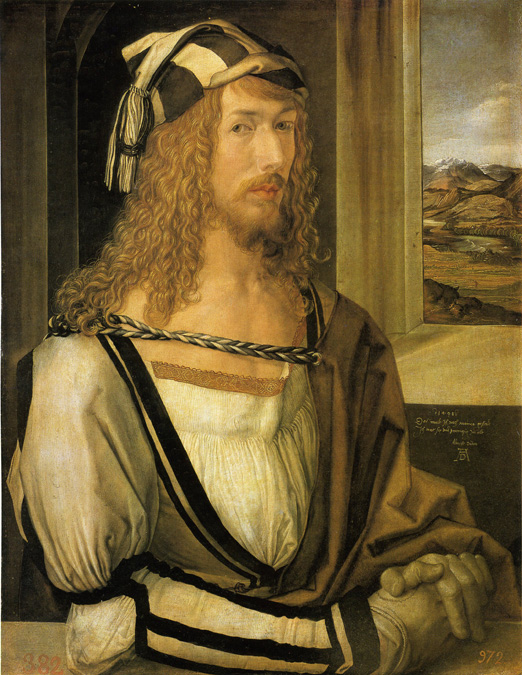
Durer, Self Portrait, 1498


Look at that mane of glory. His hair automatically makes him a winner. Merely glancing at his careful posture, elegant clothing, and slightly haughty side glance, this self portrait of Durer introduces himself as the perfect Renaissance man. He also seems to illustrate his high status with the attitude and the fact that he’s taller than the rolling mountains and hills in the background. So he’s elevated himself, literally and metaphorically. What a modest man.

Finally, the realism kicks in here, with almost normal body proportions. His hands aren’t overly sized, nor is his arms extraordinarily bulky. Not to mention, he’s got a great fashion sense – his hat matches perfectly with his other attire. In fact, he really likes to emphasize his aristocratic style with that engraving in the back that translates to “gentleman.” Clearly, not the most modest candidates for the audition, but nonetheless, Durer seems like a relatively plausible member for the band.

We’d like to proudly announce that the personality that screams diva will be accepted into the band.
  • 7:00 PM

Haut Boys: Man in Armor

The Haut Boys
The Audition for the Newest Art History Boy Band – The Haut Boys
Curated by Susie Xu

Piombo, Man in Armor, 1512

More like Haut Man, with his Ketchell-esque facial hair style, like the Boy with a Greyhound, whether it’s his gleaming armor or his critical gaze, this unknown man has an odd, tempting side. His side gaze definitely has a hint of malice, which doesn’t seem too appealing. But we really can’t blame him. This seems to be the “manly” style of the time, and clearly, he’s a follower, not a leader. Moving on.

His militaristic style gives him a sense of superiority and menacing power. His posture, definitely as a man of power with his strong left shoulder, and holding a perhaps makeshift weapon of some sort gives a chilling, bloodthirsty look. Especially his stink eye look, it won’t entice the public were he to debut. The sharp eyebrows and bright light that bounces off his shiny silver armor just doesn’t do the man justice in terms of being in a boy band. Perhaps he’s a kind, caring person, but there’s no trace of that within this painting. 

I’m sorry, but we decline to admit him into the Haut Boys band. Haut Men, maybe.

Editor's Note: We at MKCPT vehemently disagree with Ms. Xu on this one. We believe Man in Armor to be absolutely smoldering, and his addition to Haut Boys would bring the important adult female demographic (and their pocketbooks) to the band.
 
  • 7:00 AM

Haut Boys: Boy with a Greyhound


The Haut Boys
The Audition for the Newest Art History Boy Band – The Haut Boys
Curated by Susie Xu


Veronese, Boy with a Greyhound, 1570 

Admittedly not the most attractive at first glance, fangirls and fanboys may wonder why we scouted him into the Haut Boy band. But do not doubt the keen eyes of the scouts. Check out his well-defined side profile and his cherry red lips. This is untouched by our makeup artists. Not to mention, just take a closer peek at his self perm–well done for a self-attempt. And though we must admit, his pants and leggings are slightly offsetting and his shoes are just too dull, he is needed within the band.

We kind of need him for his aesthetic visual, but mostly we require his family’s donations. After all, he is from Colleoni family of Bergamo. The handsome chap has a family chapel to call his own, so we’re in desperate need of his family investments, considering we have none.

Though there’s no immediately outstanding section of the the painting, and the green attire is almost too green to be aesthetically pleasing, the aura of the boy and his lean greyhound give viewers a sense of powerlessness, perhaps just from his gaze.

His flaming charisma shall be an intense addition to the Haut Boys. Congrats, Greyhound Boy. You’ve passed the auditions.
  • 7:00 AM

Haut Boys: Three Philosophers

The Haut Boys
The Audition for the Newest Art History Boy Band – The Haut Boys
Curated by Susie Xu


Giorgione, Three Philosophers, 1508

Once again not the main figure, but rather the man in the back, has caught the eye of the Haut Boy scouter. The artsy man with the with the sharp jaw bone that muses into the forest seems to be as smart as he is attractive – which can be a great contribution to the Haut Boys band.

With an aura of mystery and almost weightlessness surrounding the painting, Giorgione portrays the three men of clearly different ethnicities with an alluring style. All contemplating something fascinating, their relationship to each other, besides the mutual job title, seems obscure. And yet, each man compliments the others in terms of placing and color. There’s a lovely balance of light colors on the outside and the tomato red in the middle.

Not to mention the youngest one in white is delicious. Haut Boys? Check.

  • 7:00 AM

Haut Boys: Joachim Takes Refuge in the Wilderness

The Haut Boys
The Audition for the Newest Art History Boy Band – The Haut Boys
Curated by Susie Xu

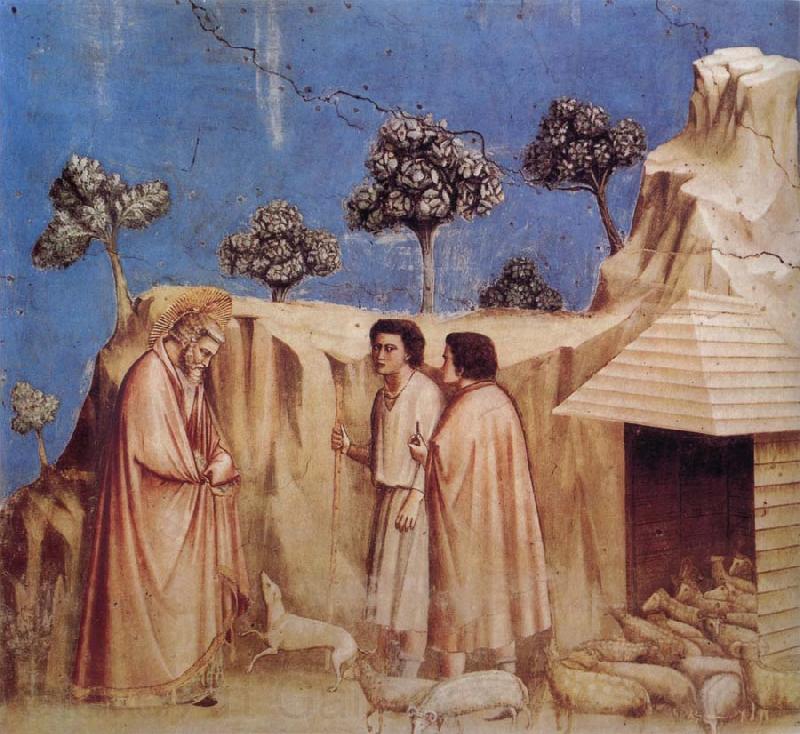
Giotto, Joachim Takes Refuge in the Wilderness, 1303-06

Introducing the Haut Boys Auditions for the world’s first (and hopefully final) Art History boy band. Derived from a lack of talent in the real world cute boys in paintings, the following is a compilation of potential members for the world phenomenon. Take a seat and enjoy.   

The first painting hottie appears in early 1303 in Giotto’s Joachim Takes Refuge in the Wilderness. Fear not, the eye candy mentioned is not Joachim (the old man with a plate on his head), but the Shepherd on the left. Though rather crude in drawing, he clearly has the potential to be someone drool worthy. With his piercing gaze, Nick Jonas hair, plus his natural eyeliner this shepherd boy just needs a friendly smile to be a winner. 

Though his first photoshoot seems a bit lacking, with the flatness, cabbage trees, dog-like sheep, and that one exiled old man asking for help, overall Shepherd Boy #1 doesn’t seem to appreciate the surroundings, or the fact that his friend may or may not be flipping him the bird. 

The camera lights also don’t seem to be functioning correctly for there’s no light source. Clearly photographer Giotto needs to take a break–permanently.  

Either way, Little Johnny, as we’ve come to name him, makes the cut for Haut Boys.

  • 7:00 AM

Still Life with Lemons, Oranges and a Rose


Francisco de Zubarán, Still Life with Lemons, Oranges, and a Rose, 1633 

Though undoubtedly there's enough symbolism to go around twice for this painting, that's not the emphasis of this. For me, the Still Life with Lemons, Oranges, and a Rose by Zurbarán isn't just a beautifully simplistic painting—it's a childhood memory.

The Still Life with Lemons, Oranges, and a Rose has been in my memory since five. After all, it was printed on my piano book that I practiced with. Through frustrated tears, happy tears, and a vast pool of emotions, I stared hatefully or lovingly at the book. In times of frustration I stared stupidly at the painting, memorizing every crevice and detail, from the tiny wilting part of the pink rose to the shadow on the lemon that seemed to overextend. I had engraved the unknown painting in my memory.

Piano is half of me, and yet I hated it with a passion when I was younger. I hated the book cover, I abhorred the person who painted it, the stupid half-hidden pink rose, and the pure perfection of it. It sat on my piano, mocked me when I struck wrong notes, comforted me when I saw it peeking out of my bag in piano competitions. This book was like a friend that purposefully annoyed me, but I couldn't just toss it aside. It was too precious, in an unspeakable way.

Imagine my influx of emotions when I saw it on the screen in the Art History room. My eyes were wide, and I grinned like an overeager tourist. I had found the painting that's preceded any memory of art. (If you didn't know, I was completely blind-sided by the staggering amount of artists besides Da Vinci and Picasso.)

So, to my old piano book, falling apart at the plastic binding, with torn pages, food stains, and the plastic laminate peeling, hello old friend. I have finally found the painting that graces your old cover.

  • 7:00 AM

Officers and Subalterns of the St. Hadrian Civic Guard Company


Officers and Subalterns of the St. Hadrian Civic Guard Company, Frans Hals, 1633

Welcome to Version 2.0 of Where's Waldo-- with a twist. Themed during the sixteen hundreds, this time, you're trying to find the unhappy, mustache-less man. (Hint: He's on the left side.) Or if you insist, you can also play Spot the Difference. Also look for the man that doesn't have his head slanted. (Hint: There's actually two.)

Painted by Frans Hals in 1633, Officers and Subalterns of the St. Hadrian Civic Guard Company has  trademark features that screams Frans Hals - the mustaches and suspiciously happy men. Also a characteristic trait of tilted heads. On a second look, one can find that in this painting especially, the vast majority of the happy-go-lucky mustache men have tilted heads as they stare directly at the viewer or giving the fish-eye at fellow company members.

Though his techniques in general were not original, such as changing eye contact and body turns or the alla-prima technique from the Italians, his methods of creating the look are well-praised. Hals also has an unusual, meticulous manner of painting his classic mustaches, for each hair seems alive and individual. Not only was his facial hair on his portrayals elaborate, the details of each outfit are particular as well. From the collar to the hundreds of wrinkles through out, each outfit is slightly different on each man- an attention to detail that not all artists have. (Take for example, Night Watch, by Rembrandt. The further away the men are from the center light, the more blurry and blob-like they are.)

And if there's anything that one should take away from this post, that is, on any painting, one can easily identify Frans Hals by the tilted heads, the mustache, the details, and the bilious, happy smiles.

And if you really couldn't find the answers to the games, the men are right under the American flag to the left. While you're re-looking, you might as well get yourself a new pair of spectacles.

  • 7:00 AM

The Ecstasy of St. Teresa


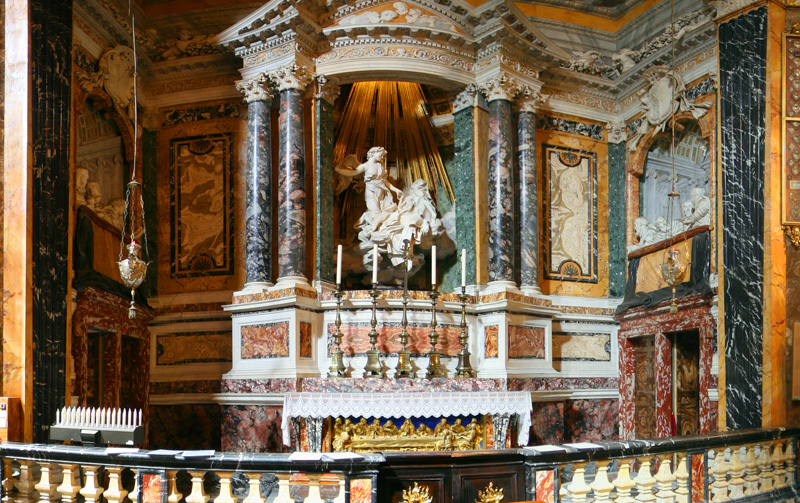
The Ecstasy of St. Teresa, Bernini, 1645-52

Out of all the sculptures to display on the screen, this is not the one to show when the headmaster walks in.
The Ecstasy of St. Teresa is as suggestive as it is gorgeous. Viewed in a sexual and religious manner, the sculpture has defied the unsaid laws of 'Pope rule' at the time. Normally elegant and humble, the art work inside most chapels of the time were not as expressive as this one, with barely a thin line between naughty and zealously religious.

And yet, it's the drastic difference in this sculpture that highlights the awesome beauty and Bernini's incredible talent. Teresa of Avila (not to be confused with Mother Teresa) was born in 1515 and lived during an era where Europe was in more turmoil than the norm. She wrote various books on her link with God and many excerpts are like the structure-- almost borderline sexual. Her descriptions of her connection with God doesn't need a mind to be in the gutter. In fact, it almost sounds like it comes out of a erotica novel.
"I saw an angel near me, on the left side, in bodily form... He was not tall, but shore, marveously beautiful, with a face which shone as though he were one of the highest of angels... I saw in his hands a long golden spear, and at the point of the iron where there seemed to be a little fire. This I thought that he thrust several times into my heart, and that it penetrated my entrails. When he drew out the spear he seemed to be drawing them with it, leaving me all on fire with a wondrous love for God. The pain was so great it caused me to utter several moans; and ye tso exceeding sweet is this greatest of pains that it is impossible to desire to be rid of it, or for the soul to be content with less than God."

May Fifty Shades of Grey cower in shame.

Because of the exceedingly great connection Teresa has with God and the angel, Bernini portrays the sculpture and her moment of ecstasy with utmost precision. As dramatic as the sculpture may seem, it bodes well with St. Teresa's supposed experience. With her mouth partially open, eyes rolled upwards, and body limp, Bernini is somehow able to portray movement within the stone structure. The drapes, so intricately chiseled are perfectly extravagant, curled lightly at the bottom of the masterpiece. But for once, Bernini uses a different technique with the structure. Normally, he allows the viewer to view his piece from only one point of view, one perspective, but with The Ecstasy of St. Teresa,  one cannot view just the sculpture alone. Around the piece, he sets the background. Underneath the work, lies a painted skeleton, as if St. Teresa has moved beyond the mortal world into an entirely different level. Above the work are both fake golden rays of "light" and natural light as well, peeping in from a window, bathing the sculpture in perhaps "Holy Light".

In total, The Ecstasy of St. Teresa, not only displays a beautifully portrayed, holy moment, but also illustrates Bernini's almost cheeky acknowledgement of his own skill.
  • 7:00 AM

The Night Watch

The Night Watch, Rembrandt van Rijn, 1642

The Company of Frans Banning Cocq and Willem van Ruytenburch, 
or much more famously known as The Night Watch is a misnomer. The painting, in reality, merely depicted a multitude of fashionably stout men marching out. However, it's the enveloping darkness around the characters that brings confusion to viewers and critics alike. According to some, it's purely the dark finish that has left modern day viewers under the impression of nightfall. But that does not seem to be the main focal point of this painting. Rather, Rembrandt van Rijin skillfully uses a technique called chiaroscuro, varying character expression, and seemingly fluid movement to broadcast his adeptness in painting. Chiaroscuro, especially highlighted in The Night Watch, is where the artist uses vastly different light and dark colors in one painting. Rembrandt van Rijin accentuates the young girl with the chicken in left and the two men in the center with Christ-worthy blinding light while immersing the rest of the background painting with dark colors. 

The detailed portrayal of the character expression, as well as their stances, also brings about an aura of tension and stress. Instead of a march, usually orderly and confident, the march here is disarrayed and confused, as if the two leaders, Fabulous Frans and Wondrous Willem, have no clue what they should be doing. The chaos that clutters the background adds to the feeling of drifting aimlessly. With fingers, spears, and a variety of other weapons pointing in nearly all directions, it seems as if this Night Watch was the cheapest one for the city. Perhaps they misunderstood their orders and had prepared themselves for a fashion watch instead. Clearly they're trying to make a fashion statement with their sweet hats, intricately combed beards, and coffee-filter collars.

Finally, perhaps the most commendable, is Rembrandt's usage of movement. Unlike fellow paintings of the time, the individuals in his painting seem be fluid, as if they could begin walking at any moment. Compared to other paintings around the mid-sixteen hundreds, a majority of them portraits or still-life paintings, Rembrandt's The Company of Frans Banning Cocq and Willem van Ruytenburch outshines them all.
  • 7:00 AM

Nine Dragons Hand Scroll

 Chen Rong, Nine Dragons Hand Scroll, 1244 
If you couldn't tell by this, one of his more well-known works, Chen Rong specialized in painting dragons. Created during the Song Dynasty, the Nine Dragons painting emits a vibe of raw power and yet lithe grace.

An avid follower of the Dao concept, Chen Rong was the Song Dynasty's hipster, painting with only black rather than the bright colors of other paintings during the time. He was not elaborate with his materials, for he used the most basic black ink and mere paper instead of silk.

The dragons that Chen Rong creates seemingly circulate the painting, ceaseless in their movements. Some scholars interpret the disappearing and reappearing dragons as a painting representation of meditation in Daoism. Nevertheless, the inky smoke, the wispy clouds, and the playful yet ferocious dragons represent a beautiful part of the Chinese culture where Dragons are revered.

  • 7:00 AM

The Last Supper

Tintoretto, Last Supper, 1592-94 

Out of a selected handful of the famous "Last Supper" paintings, Tintoretto seems to paint the gloomiest one. From the biblical story, the Last Supper, despite the rather despondent outcome of the dinner, usually portrays a scene of hope and optimism, for though Jesus must leave, he leaves behind a world that has changed for the better.

Tintoretto takes that perspective and throws it back in the viewer's face. Perhaps he was bullied as a young child - his last name just begs for mocking - or perhaps he's just a brooding hipster of the late 16th century. Either way, unlike the other famous Last Supper paintings, such as Da Vinci's, Tintoretto portrays this final scene in one of chaos, greed, ignorance, and most of all, pessimism. Not only does he completely revamp the aura of the painting, the characters he includes in it are vastly different as well. In other, classic Last Supper paintings, the twelve apostles sit in reserved and mannered ways, as they carefully keep their eyes trained on the main figure, Jesus Christ. However, in this version, though the viewer's eyes are immediately drawn to the brightest Jesus in the background center, no one else is. All the characters make conversation with each other or stare uncaringly at the ever-so-fascinating mystery item in Christ's hand. There's not a single man or woman that seems to mind that in only minutes later will this holy man be taken away, or the fact that there seem to be wispy, wandering souls just floating in the air. No big deal.

The darkness that envelopes the room is so heavy and powerful that even the burning light and Jesus's own luster cannot seem to dispel it. It's suffocating and pressuring, the obvious symbolism present. Compared to other versions of the scene, the dankness of the room seems to represent sins of every type. Purity does not exist in this painting, besides for Jesus. The indifferent looks on the apostles with one man even bored enough to prop his head up with one hand displays the leaking power of religion.

Tintoretto's rendition therefore brings various criticisms and some unhappy viewers. An outraged cry thrown at him is the fact that the number of apostles at the scene isn't clear. And you can't count. Though undoubtedly a bit more obscure than others, Tintoretto still depicts twelve apostles with the faint glowing halo behind their heads. If one uses both hands and one foot, he or she can easily determine that there are indeed twelve men with faint halos behind them in this painting. Congrats on passing kindergarden math.

Others claim the work lacks realism. Oh really. Does it really lack common sense? Thanks for pointing it out because clearly I missed that while I looked at this. It does miss some realism, perhaps when compared to other paintings of the Mannerism era, but perhaps this was purposeful. Sure these apostles that ignore Jesus have bland and impersonal characteristics, but they're supposed to represent the people, the lower class, or even the society as a whole. But one cannot absolutely label this painting as one that lacks realism for in the foreground the outfit of the servers or even the setting as a whole has a beautiful, realistic and detailed aspect to it.

Despite all the faults people can find, this painting still brings a different perspective to a normally bright and optimistic scene. Though poor hipster Tintoretto still gets bashed, now viewers can undoubtedly appreciate the truthful portrayal of the heart of darkness in each human being.


  • 12:15 AM

Wedding Portrait


Jan Van Eyck, Wedding Portrait, 1434

Distinctly Northern Renaissance, Jan Van Eyck's Wedding Portrait, or sometimes referred to as Arnolfini Portrait, is well known its enormous amount of symbolism. Though Wedding Portrait is still far from reaching the intensity of some of Brueghel's paintings, there's apparently more symbols than one can count with two hands. 


However, my dirt with this painting, or perhaps the entire Wedding Portrait fandom is their interpretation of the objects inside the painting. (I sometimes have this issue with book symbolism, too.)


For example, let's start with the discarded shoes on the bottom left. According to the high and mighty artsy people, those pair of shoes drawn in the corner mean sanctity. Perhaps they were standing on holy ground. They were getting married. But what if the man tossed those shoes to the side because they're uncomfortable, not to mention unsightly? I mean, look at the acute angle shape of the slipper. It wouldn't be comfortable even if the shoe were made of downy feathers.

What about the dog in the bottom foreground? It can be understood as a symbol of fidelity and perhaps wealth (due to the rare breed of the dog). But I wonder, what if, the dog was just a beloved pet the couple wanted in the photo with them?

There’s also the hanging chandelier. Clearly, the chandelier wasn’t meant for light when the sun falls behind the mountains and darkness creeps up. It’s a symbol for the unity of a marriage because that’s what all chandeliers are created for.


But perhaps the interpretation that most irks me is that faded, slightly hidden orange on the windowsill in the back. Does it really represent the purity and innocence before Adam and Eve, or is it really just an orange the couple forgot to hide in a pantry because the painter came in too soon? I would rather prefer the latter. It’s an orange, and nothing but an orange. The Bible doesn’t even specify what fruit Eve picked in the first place, so naming that isolated orange in the background as a symbol of innocence before the fall of Adam and Eve stretches the interpretation by a few miles. 


But despite the (in my opinion) wacky interpretations of the painting, I don't doubt the skill and cleverness behind the paintbrush. Van Eyck's oil painting is almost the epitome of a Northern Renaissance painting, with attention to detail, humanism, and lack of ornate decor. You see, a shoe can sometimes just be a shoe. 
  • 7:00 AM

Herodias and the Head of John the Baptist

Francesco Cairo, Herodias and the Head of John the Baptist, 1625
Self-proclaimed wimp, I personally despise gruesome paintings. In fact, I shy far away from them by uttering a gasp and slamming my computer screen shut.  Herodias and the Head of John the Baptist was no different. Poor John the Baptist and his unhappy severed head just filled me with a strong urge to stop looking at the painting immediately and search the internet kittens and puppies to relieve the image.

However, the more I force myself to look at Cairo's painting, the more I begrudgingly appreciate the darkness and horror of the work. It's horrifyingly beautiful with the lighting that appears from the right and the eloquent facial expressions.

Upon cautious, closer inspection, however, once again the enormous urge to vanquish the painting from my sight resurfaced. His tongue! Herodias is swooning in happiness as her hand hovers over the tongue of John. Clearly, someone's excited that John died. But she's holding something faint between her fingertips.

Apparently she's holding a thin needle and the source of her happiness is because she hated John's preaching to her husband, Harold, earlier. Perhaps he insulted her attempt at swag with her hanging chains. But whatever the reason for her abhorrence, she ordered for his death and his head. When the beheaded John was brought to her, she delightedly pierced his tongue - a revenge for speaking against her. What a hardcore woman. Joan of Arc could only dream of such a vengeful attitude.

The intricacy of the painting finally surpassed all automatic impulses to delete the photo off my computer. The awesome detail to Herodias' delighted expression and the slightly-agitated facial expression of John the Baptist brings out an inexplicable feeling of awe and terror simultaneously.

Though I still don't fully like this and plan on deleting this after I finish the blog post, I've at least come to appreciate the dark event portrayed beautifully in the painting.  

  • 7:00 AM

Pieta

Michelangelo, Pieta, 1498-1500
Created during the classical sculpture rage , Michelangelo, at a young age of 21, created this masterpiece-- often called his best work.   

Demolishing all opposition, Michelangelo wins for creating the most disproportionate sculpture of the Virgin Mary and Jesus. With a lap wide enough to fit another three sons and a towering body structure enough to intimidate Gilgamesh, Michelangelo's Virgin Mary in Pieta is slightly off-balance, to say the least. Jesus, on the other hand, has the enviously petite, thin, and "ab-tastic frame" of a modern male teen model. Clearly Michelangelo had a faulty measuring tool or desperately needed a pair of corrective lenses. Nonetheless, he was still proud of his work, and when he overheard someone claiming his sculpture to be someone else’s, he immediately set to work engraving his name across the sash on Mary’s chest. Were Michelangelo applying for college today, two words that’d describe him would be talented and territorial.

And despite it all, Pieta radiates of incredible sorrow and soft, holy serenity. Viewers can easily look past the odd proportions of the sculpture and see the intricacy of each detail. Unlike a majority of other sculptures and paintings that portray Mary swooning or hysterically sobbing, Michelangelo somehow incorporates inexplicable sadness and resignation into one expression. With her left hand poised in a palm-upward motion, she seems to be beckoning to the viewer, perhaps to share her impossible pain. Jesus, also unlike a majority of other sculptures and paintings that preceded this one has a face, void of sufferings and pain. Rather it’s peaceful, as if his work has been done to his contentment.
True to his era, Michelangelo shows us an extremely human portrayal of the figures. Mary’s draping robe is simply gorgeous as it pools gently beneath the Christ, and though their figures in general are off proportion, the details of the face, hands, and body are exquisite.  

Mary's expression in this sculpture brings in a new type of art form, unheard of even in the Roman and Greek sculptures that Michelangelo based a majority of his works off of. Pieta is a gorgeous representative for Michelangelo's talents.
  • 7:00 AM

Madonna of the Rocks

Leonardo Da Vinci, Madonna of the Rocks, 1506
Perhaps the artist most known by the average citizen, Leonardo Da Vinci has made himself renowned for Mona Lisa and The Last Supper. I considered him overrated and more often than not, scoffed at the praises sung at his Mona Lisa. Frankly, I don't see anything as fascinating about her smile as the other do. It's a nice, tight-lipped smile,  great, now let's move on to the next painting.

However, starting from the pre-renaissance era to the era of humanism in paintings, it has brought a few undeniable talents of Da Vinci to light. (And as much as it pains me to commend anything about him, the following are genuine, unbiased complements.)

In Madonna of the Rocks (1506 version), Leonardo Da Vinci portrays the scene where Mary and Baby Jesus escape from King Herod's Massacre of the Innocents (where Herod killed a bunch of babies in desperate hope that one of them be Jesus) and at the same time, coincidentally meet up with John the Baptist, Jesus's cousin. (Artists often identify John the Baptist with his cute cross staff.)
The he/she figure besides baby Jesus is an angel that currently has a gentle hand on baby Jesus's waist to prevent him from falling into some deep abyss only centimeters away. 

Here, Da Vinci makes brilliant use of his "sfumato" technique - which is a play of shadows on a person's face, mouth, and eyes. Instead of bluntly outlining his figures, he instead blends in white highlights and uses tonal gradation, giving a much more three-dimensional view to his figures. Also apparent in a majority of his paintings is the clear and humanistic form of his subjects. Unlike a few of his other fellow painters of the day, Da Vinci used real human subjects to sketch and paint from, evident in the perfect posture of both the he/she angel, Mary, and John the Baptist. 

Da Vinci also enjoyed using symbolism in his paintings. The rocks that decorate the background of the painting represent Mary and Joseph, both described in the bible as stable like rocks. The white flowers on the bottom left seem to be Stars of Bethlehem, symbolizing purity and innocence. Also the hand position of baby Jesus seems to be in the motion of blessing, perhaps a foreshadow. 

But with every Da Vinci painting comes some type of controversy and story. Critics often presume that this painting was a collaboration of more than just Da Vinci. Take the Stars of Bethlehem for example. They are extremely unrealistic and a enormous contrast to the rest of the painting. The flowers are flat, and unlike Da Vinci's sketches of flora. And detail apparently was not put into the flowers for the Stars of Bethlehem usually have six petals, not five. 

Though I cannot say I've become a fan of Da Vinci, with Madonna of the Rocks, I can at least say I won't scorn anything related to Da Vinci from now on. 

  • 7:00 AM

The Mystic Nativity

Sandro Botticelli, The Mystic Nativity, 1500
Sandro Botticelli, AKA Alessandro di Mariano Filipepi, walked both the life of luxury and the life of poverty. During the rainbows and unicorn portion of his life, he was best friends with the gangster family: the Medicis. During that friendship, he was renown for his paintings like Primavera. However once the Medici family fell from grace, he did too. So poor Botticelli finds himself another leader, Girolamo Savonarola. Savonarola was a rather insane monk who preached of leaving all worldly goods and reforming the government. Of course, any mention of reforming the government at that time should have been an enormous red sign screaming for Botticelli to leave the group. And instead of listening to common sense, Botticelli became deeply immersed in all that the monk preached. And that's where his works turned religious instead of mythical. The most prominent example would be The Mystic Nativity. Just by the title, Botticelli labeled himself as a fanatic and/or devout religious man.

Not only does the subject change in this painting, but the method in which Botticelli paints also slightly differs from before. In The Mystic Nativity, Botticelli paints a story instead of one scene, and to say that he enjoys inserting symbolism is the biggest understatement of his career. Starting from the bottom left, with the road, Botticelli paints a clear separation of the human, mortal and heavenly worlds. And rather cutely, Botticelli paints blue little devil monster creatures and snakes that decorate the view until about 1/3 up from the bottom. That's where the mortal world makes connection with the heavenly one and the symbolism is apparent. There are no devils in heaven. The viewer's eyes move from left to right from the angels seemingly helping the mortals to the final center with Mary, Joseph, and Baby Jesus. The gaping cave behind the family possibly represents the cave in which Jesus would emerge from (after his death) years later. The olive trees along the pathway represent connection between the human world and the divine world.

Botticelli enjoys using symmetry, evident in this painting where the angels circle at the top are evenly matched in colors and the forms of the group of men, most likely the shepherd and the kings, also show balance. If things aren't religious enough, Botticelli hammers the final nail in his religious coffin with Greek inscription at the top. It roughly translates to "This picture, at the end of the year 1500, in troubles of Italy, I Alessandro, in the half time after the time, painted, following the eleventh of Saint John, in the second woe of the Apocalypse, during the release of the devil for three anda  half years; then he shall be bound in the twelfth we shall see as shown in this picture." Botticelli evidently did not understand the concept of a run-on sentence. But in short, he possibly meant something along the lines of waiting for the time of Christ to save them all.

And, unfortunately for him, his revered insane monk leader, Savonarola was finally accused of being insane and killed along with a majority of followers. Though Botticelli escaped execution, he could never get his career on path again and thus he died penniless. Ouch.

  • 7:00 AM

Unnamed Mountain Water Painting

仲丹勋,Unnamed, 1993
Known as 山水画, or literally translated as Mountain Water Painting, it's known as one of the highest forms of Chinese painting. With its inception in the Tang Dynasty, these landscape paintings focus on realism, but put a greater emphasis on grasping an emotion, such as turmoil or tranquility. From Tang Dynasty, and especially the Song Dynasty, artists began blurring the background and intensifying the clarity of the foreground. These landscape paintings also do not use color to enhance their beauty, but rather use depth and specificity. Often on the side of the paintings, there will be rows of punctilious and beautiful handwriting often on the scenery painted, or to a alluded political view- all usually written in poetic prose.

(Apparently, now I have to give my "thankfulness." I'm thankful for this painting because now I can do my Art History blog post. I'm thankful of it's background, foreground, and middle ground. I guess I can be thankful for it's lackluster color choices. I'm thankful for having free reign over blog posts to write this post, and I'm thankful for Mr. Luce's friends that helps boost this blog's traffic. [I'm also thankful for Ryan Gosling and all his glory.])

Now, I'm more thankful for the artist in this case, rather than the painting - but that doesn't undermine  my high opinion of the type of paintings. These landscape paintings have surrounded me all my life. They represent my culture that I've always felt a detachment to, and they represent uniqueness to a specific country only. However, most of all, they represent my mother because my mother actually painted this in 1993. It was on display in the Suzhou Lion Grove Garden before my relatives bought it back for us. It was one of the last paintings my mother ever painted before she came to the United States. She gave up her passion for us. I dedicate this "Thanksgiving: Susie Is Thankful" post to my mother who gave up her fantastic talent for me and my sister.

  • 7:00 AM

Vatican City Spiral Staircase

Vatican City Museum Spiral Staircase, 1854
Through me you enter into the city of woes,
Through me you enter into eternal pain,
through me you enter the population of loss.
Justice moved my high maker, in power divine,
wisdom supreme, love primal. no things were before me not eternal; eternal I remain
Abandon all hope, you who enter here.

- Inferno, Dante, Canto III, Lines 1-7.

Yikes. 


This quote would definitely be a cruel opener for a final exam. Or a very clear warning for Dante to get out of there. (Too bad Virgil’s apparently an optimist and encourages him to enter. Double yikes.) This quote graces the Gates of Dis, or the Entrance to Hell, and serves as a final nail in the coffin that any sinner that manages to enter these gates has no need to retain hope for escape. It’s a miracle Dante doesn’t swoon at this warning. 


Because Dante describes Hell as one of many levels with different types of sinners on each level, almost like a spiral down to the worst, most dismal part, I chose the staircases of Vatican City’s museums as a representation of the quote. Renown for their classic spiral down to the bottom, it reminded me of the the seemingly spiral descent into hell. But it's also beautiful, both the stairs and hell in a strange way. The pain and woes of hell bring an odd sense of beauty. It's the mixture of the different levels of pain and sins that meld together to create this intricately designed hell known as Dante's Inferno. Perhaps it's the beauty of the complexity that attracts me to the entrance of hell,and its disconsolate words create a dangerous image that's chilling and beautiful . 


I think the Vatican City Museum Staircase represents it well with the colors the designers use. It starts off as a light gray and slowly changes hues to a darker but warm brown. It's gorgeous and a little bit intimidating.  

Although the Vatican City museums clearly aren't as frightening as the quote, the style of the stairs are intricately made and the seemingly perfect spiral down to each level seem to give a different feel on each level - just like in Dante’s Inferno.
  • 7:00 AM