Bad Boys
The Men Who Saw Art and Chose To Change It
Curatedby Gabrielle Fenaroli
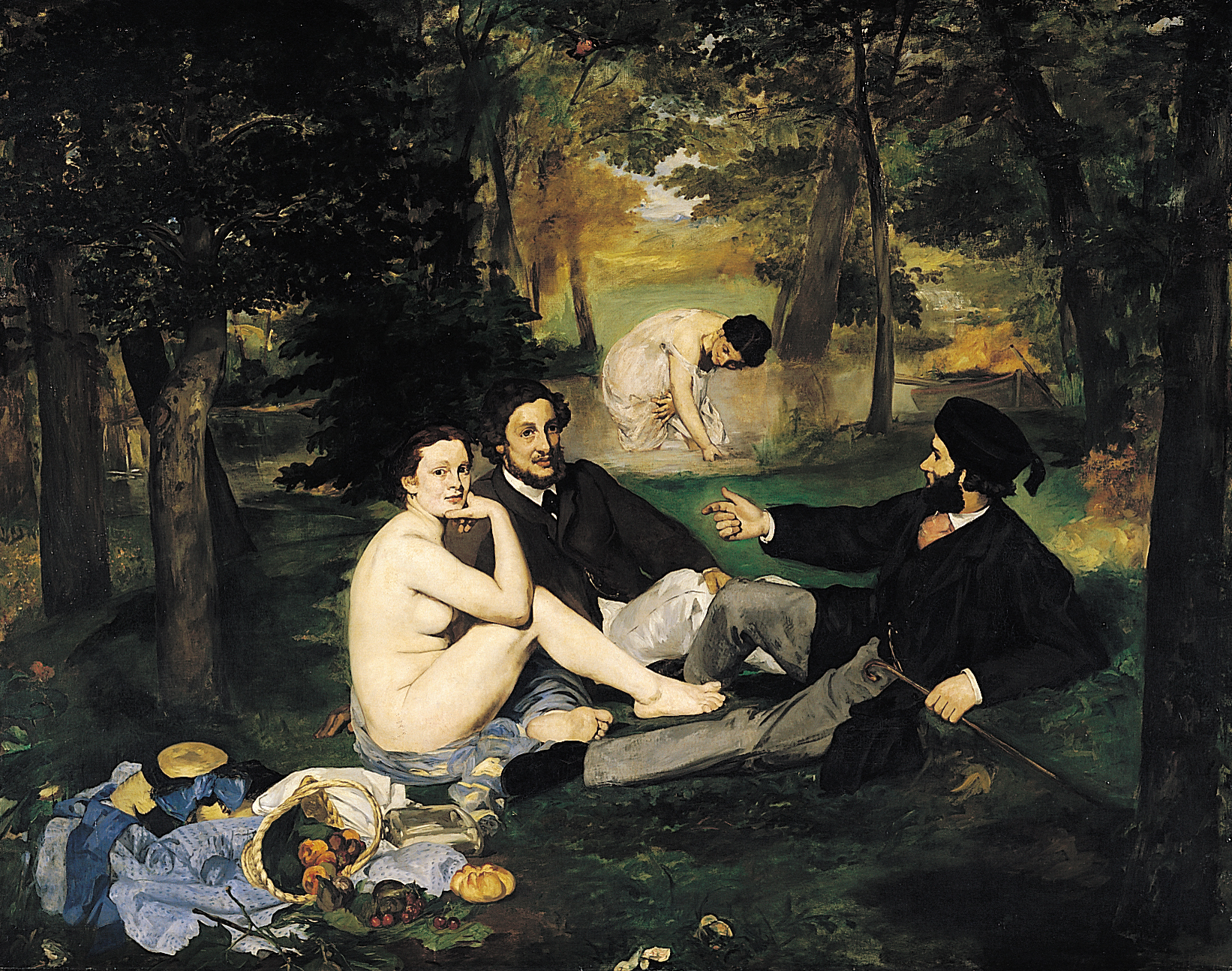
Waltzing through the Musée d'Orsay as an ignorant child unaware of the art that surrounded me, my eyes fell upon a rather peculiar painting Le Déjeuner sur l'Herbe. As I began to study the painting, I felt my mother’s cold, sweaty palms cover my eyes as she quickly ushered me away from the painting. Little girls don’t need to be staring at naughty lunches, she said in a hushed tone. It was then I realized what was transpiring in the scene, it was indeed as my mother pointed out: a naked lady eating lunch. It was just as shocking to me as it was to the French public in 1863 when it was presented in the Salon des Refuses. Édouard Manet painted the large (7 by 8 ½ feet) canvas and blatantly ignored social norms at the time. However unnerving it was to the viewers, Manet’s work sets the tone for modern art as it defies previous subjects and paves the way for new artistic freedoms.
What strikes me about the painting is the casualness of the whole scene; at no point does it strike me as a “naughty lunch.” There are no neon signs or glaring declarations that there are indeed two naked women in this scene. The two men sit around leisurely discussing politics or the gorgeous scenery that surrounds them. The woman in the background appears too large and slightly out of proportion when compared to her three companions. The combination of the crudely painted background and her large body give her the appearance that she is merely floating off in the distance. Even if the background and some of the foreground are inconsistent with lighting and shading, one cannot discount the painting for it made way for a new art form to emerge.
Although before we going giving Manet all the created he would like to believe he deserves, he does draw upon past paintings to aid in breaking the art barrier. The similarities between Le déjeuner sur l'herbe and Titian’s Pastoral Concert, painted in 1509, are undeniable. However where Manet veers off is where he gets his claim to fame. The woman at Manet's picnic stares directly at the viewer, which at the time was taboo. Manet makes his leading lady’s stare down his go to move as seen in his other risqué 1863 painting Olympia. So while I understand my mother’s intentions on attempting to shield me from the human form at the young age of four, I have grown to truly love this painting. Manet’s ability to create a scene so nonchalant but also gripping amazes me, and he does indeed make a way for future artists to continue to make mothers shield their child's eyes.
The Men Who Saw Art and Chose To Change It
Curatedby Gabrielle Fenaroli
 |
| Manet, Le Dejeuner Sur l'Herbe, 1863\ |
Waltzing through the Musée d'Orsay as an ignorant child unaware of the art that surrounded me, my eyes fell upon a rather peculiar painting Le Déjeuner sur l'Herbe. As I began to study the painting, I felt my mother’s cold, sweaty palms cover my eyes as she quickly ushered me away from the painting. Little girls don’t need to be staring at naughty lunches, she said in a hushed tone. It was then I realized what was transpiring in the scene, it was indeed as my mother pointed out: a naked lady eating lunch. It was just as shocking to me as it was to the French public in 1863 when it was presented in the Salon des Refuses. Édouard Manet painted the large (7 by 8 ½ feet) canvas and blatantly ignored social norms at the time. However unnerving it was to the viewers, Manet’s work sets the tone for modern art as it defies previous subjects and paves the way for new artistic freedoms.
What strikes me about the painting is the casualness of the whole scene; at no point does it strike me as a “naughty lunch.” There are no neon signs or glaring declarations that there are indeed two naked women in this scene. The two men sit around leisurely discussing politics or the gorgeous scenery that surrounds them. The woman in the background appears too large and slightly out of proportion when compared to her three companions. The combination of the crudely painted background and her large body give her the appearance that she is merely floating off in the distance. Even if the background and some of the foreground are inconsistent with lighting and shading, one cannot discount the painting for it made way for a new art form to emerge.
Although before we going giving Manet all the created he would like to believe he deserves, he does draw upon past paintings to aid in breaking the art barrier. The similarities between Le déjeuner sur l'herbe and Titian’s Pastoral Concert, painted in 1509, are undeniable. However where Manet veers off is where he gets his claim to fame. The woman at Manet's picnic stares directly at the viewer, which at the time was taboo. Manet makes his leading lady’s stare down his go to move as seen in his other risqué 1863 painting Olympia. So while I understand my mother’s intentions on attempting to shield me from the human form at the young age of four, I have grown to truly love this painting. Manet’s ability to create a scene so nonchalant but also gripping amazes me, and he does indeed make a way for future artists to continue to make mothers shield their child's eyes.